re:flow
E-commerce returns are costly and wasteful, yet many are avoidable. re:flow gives shoppers a moment to reconsider before returning.
What I led
Owned product direction, translated a sustainability goal into a behavior-change proposition, and carried the prototype from interaction design through front-end implementation and pitch narrative.
Product question
How do we change a high-intent decision without adding enough friction to break the flow?
My workflow
01
Frame
Focused on interrupting an automatic return without adding friction to the flow.
02
Research
Audited retailer return flows and reviewed behavior-change patterns with informal users.
03
Design
Designed the Chrome extension prompt, alternative actions, and portal rewards and history.
04
Prototype
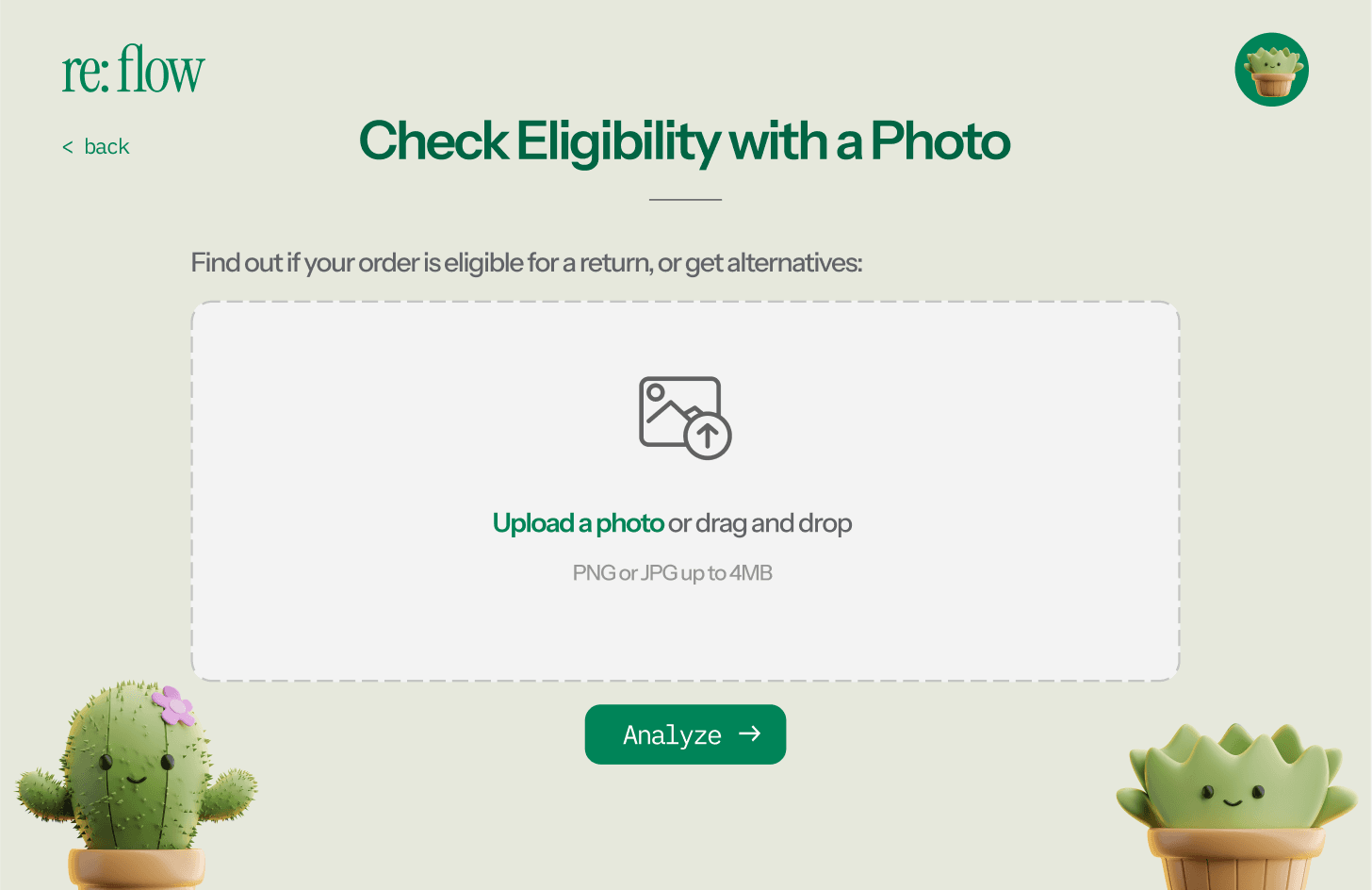
Built the hackathon demo with Gemini for eligibility and a simulated photo-upload flow.
The Problem
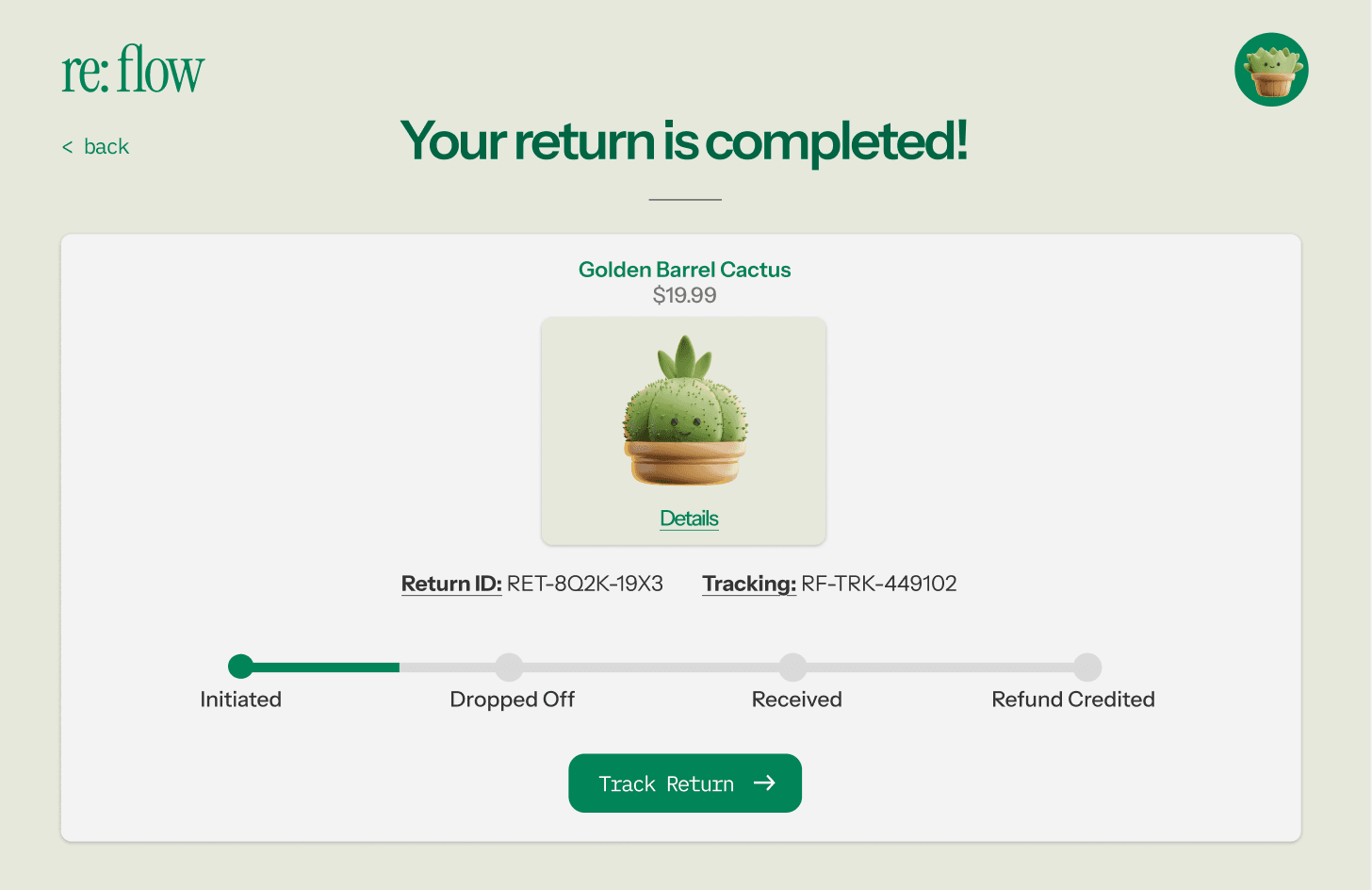
Returns make sending items back too easy. Most flows offer no reason to pause, show the impact, or consider alternatives. The problem is not a lack of options, but a lack of visibility at the right moment.
Insight #1
The intervention has to happen where the decision happens. The experience needed to meet users inside the return flow, not send them somewhere else.
Insight #2
A prompt is more useful than another dashboard. We shifted toward lightweight, behavior-aware prompts instead of return management.
Solution
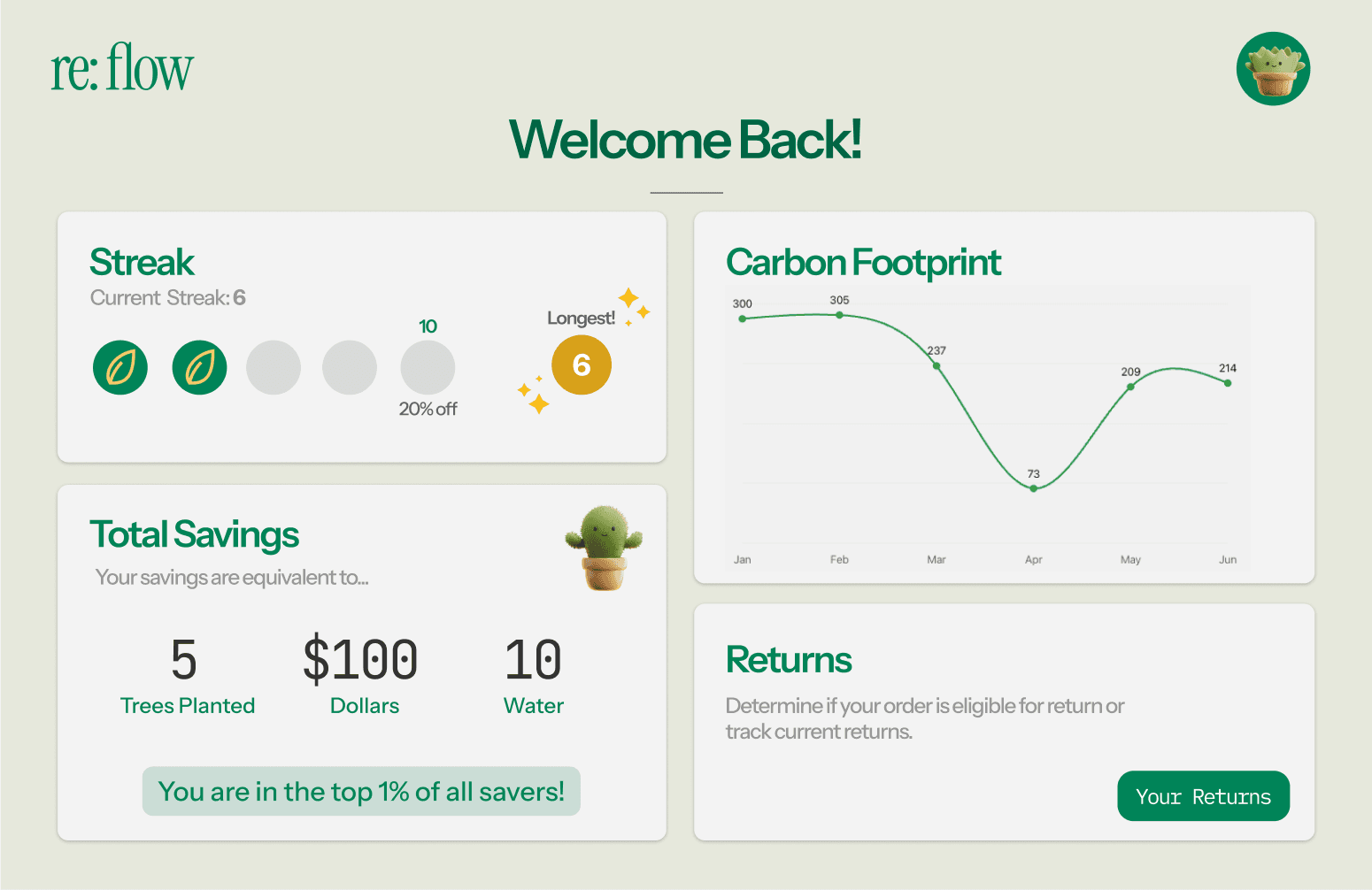
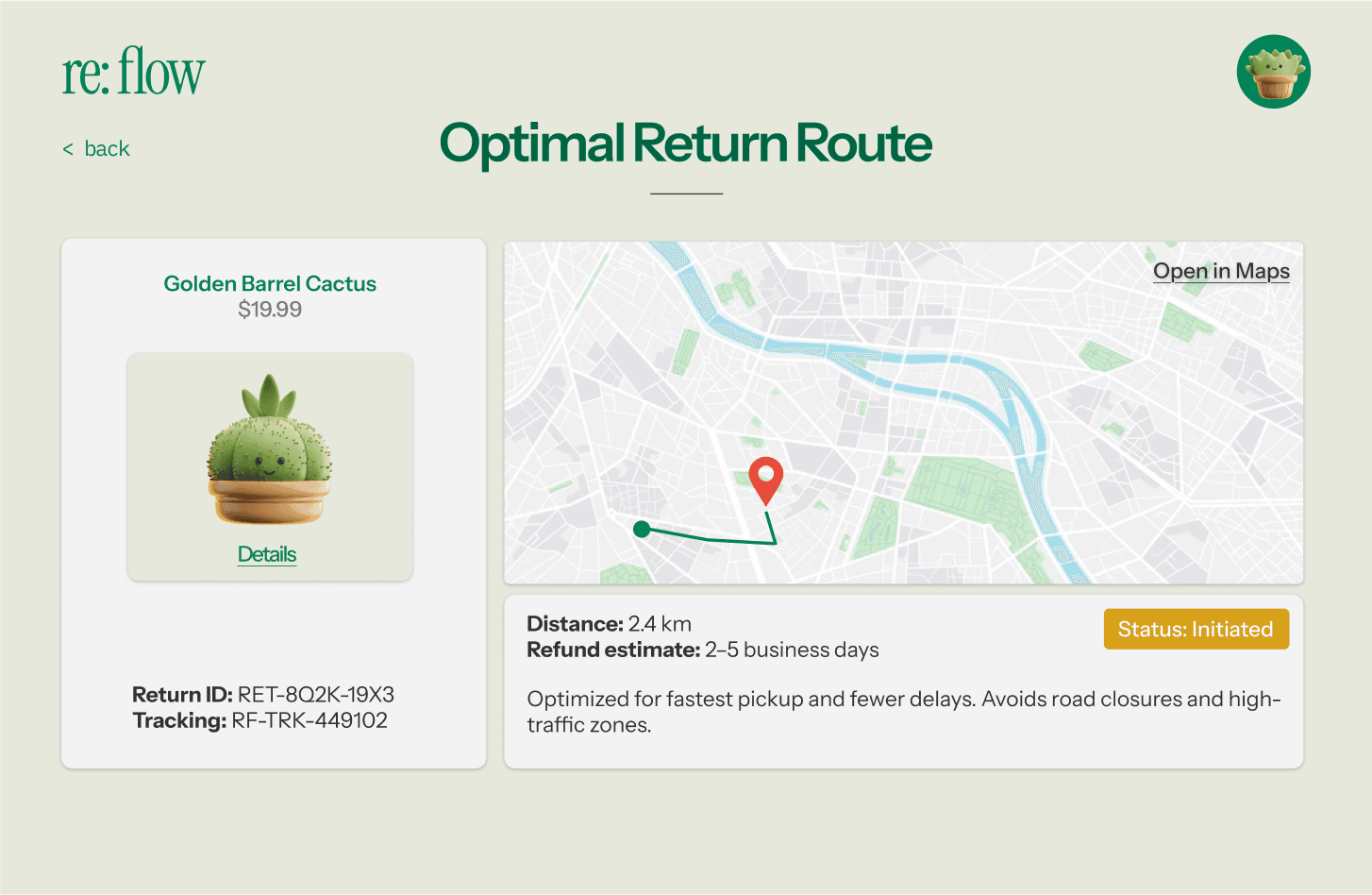
re:flow integrates into the return flow via a Chrome extension, surfacing keep, exchange, resell, or donate before the return is completed. A companion portal tracks savings and return history so alternatives feel easy to consider.
Design decisions
Put the prompt inside the return flow.
The Chrome extension became the primary experience because the intervention needed to appear where the return decision was already happening. Rather than sending users to a separate destination, re:flow surfaces alternatives directly within the retailer's flow.
Keep the intervention lightweight.
A return is already a high-intent task. We focused on removing friction, not adding it. The experience centers on three questions: could you keep it, would you exchange it, or could someone else use it? The user can still return the item at any point.
Make the impact visible.
We used rewards and environmental information to make alternatives more tangible, while the portal shows cumulative impact through savings, streaks, and return history.
Design around what Gemini could realistically support.
Gemini API was required for the hackathon, so we explored an AI-powered eligibility check. The photo-upload to eligibility flow was simulated for the demo rather than connected to real return data.
Research
For the 2-week hackathon, research stayed lightweight: informal user conversations and a scan of return flows and behavior-change patterns. The goal was to focus on the decision moment rather than building a separate return-management product.
Outcome
Semi-finalist · Hack the Future 2025. The prototype showed a simpler way to approach returns: stop making the default path feel automatic and make alternatives feel clearer and more rewarding.